The risks of SARMs
Frequently asked questions on SARMs
Find out what SARMs are, their health risks, their status in sport, and answers to other commonly asked questions.
What are SARMs?
SARMs stands for Selective Androgen Receptor Modulators.
They were first developed in the 1990s as potential treatments for conditions such as osteoporosis and muscle wasting syndromes with later potential therapeutic applications including prostate issues, urinary incontinence, male contraception and breast cancer.
No SARM has been approved for human consumption and therefore cannot be legally marketed as such. Despite this, they are often advertised across online platforms as 'safer' alternatives to anabolic androgenic steroids (also known as AAS or anabolic steroids), appealing to individuals seeking muscular development or enhanced recovery. Sellers often include the wording ‘for research purposes only’ or ‘not for human consumption’ to circumvent restrictions.
SARMs are generally designed to target androgen receptors in specific tissues like muscle and bone, while avoiding others such as the prostate. Unwanted effects on multiple tissues are often cited as a key reason for the health harms associated with anabolic steroids use.
What are common examples of SARMs?
SARMs often have multiple names based on brand names, chemical names, or experimental drug codes. Common examples are listed below, with alternative names in brackets.
- Accadrine (AC-262,536)
- ACP-105
- Andarine (Acetamidoxolutamide, Androxolutamide, GTx-007, S-4)
- Ligandrol (Anabolicum, LGD-4033, VK-5211)
- Ostarine (Enobosarm, GTx-024, MK-2866, S-22)
- RAD-150 (TLB-150)
- S-23
- Vosilasarm (EP0062, RAD-140, Radarine, Testolone)
- YK-11 (Myostine)
What is the current public health status of SARMs?
Despite years of research, no SARM has been approved by any medicines or food regulator for human use, mainly due to serious health risks. A small number are still in clinical trials, but many are considered to be failed experimental substances no longer being investigated for medical use.
SARMs sold to the public are unapproved products that have not passed the safety assessments required of food or supplement ingredients. Any sale of these products for human consumption is illegal. SARMs are often sold as research chemicals with labels such as 'not for human consumption' or 'for research purposes only'.
What is the anti-doping status of SARMs?
Because of their similarities to anabolic steroids, SARMs have attracted interest from some bodybuilders, gym-goers and competitive athletes as Image and performance-enhancing drugs (also known as IPEDs). WADA has banned SARMs in sport since 2008, listed under S1. Anabolic Agents on the Prohibited List.
How often are SARMs being detected in sport?
Between 2011 and 2024, 863 adverse analytical findings (AAFs — positive test results) for SARMs were reported globally. Over half (473) were reported between 2020 and 2024, suggesting there has been a rise in usage over recent years (WADA Anti-Doping Testing Figures, 2011–2024). SARMs continue to appear in reports made to UKAD’s Intelligence Team and in its Anti-Doping Rule Violation cases.
What are the health risks associated with using SARMs?
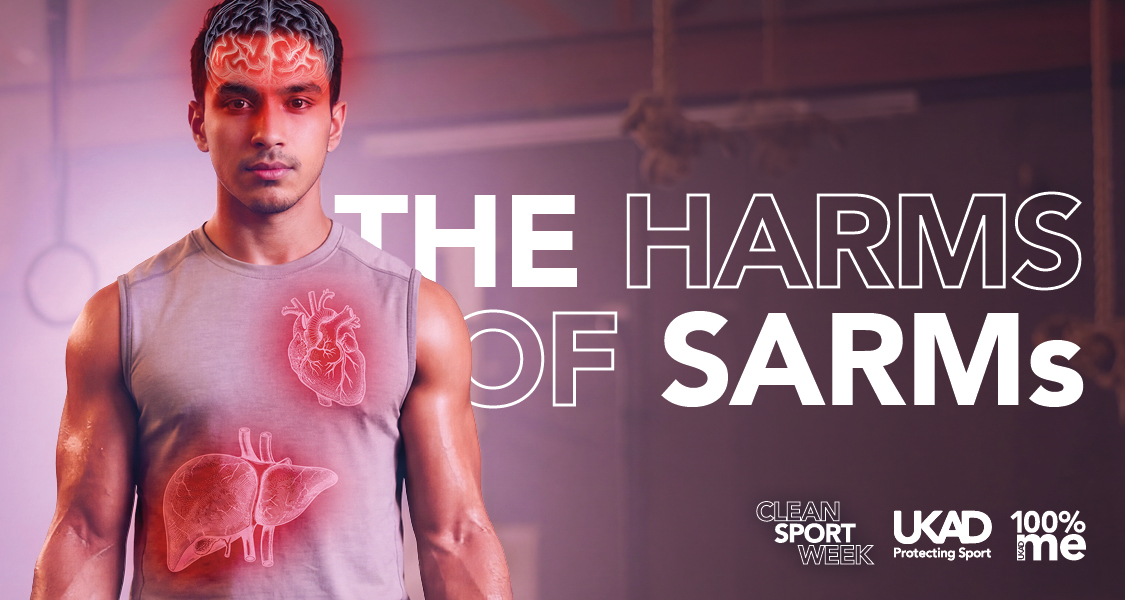
Clinical trials and case study reports have linked SARMs to severe adverse effects, including liver injury/failure, increased heart attack and stroke risk, and thrombosis. The associated hormonal dysregulation (for example - lower testosterone production) could potentially lead to erectile disfunction, loss of libido and testicular shrinkage as well as potential cognitive and mood changes, including increases in aggression.
The long-term effects of SARMs have not been adequately studied, with many individual SARMs considered to be failed experimental drugs due to discontinued clinical development.
Are SARMs 'safer' than anabolic steroids?
Despite claims on social media, the evidence suggests SARMs are not safer than anabolic steroids. Clinical trials and case studies link SARMs to serious negative health outcomes. Because SARMs are almost always taken orally and processed by the liver, there is evidence they may be more harmful to liver health than many injectable anabolic steroids.
What is the risk of buying SARMs products that have 'not for human consumption' disclaimers?
These products are not regulated by any official agency for safety or composition, and may be produced in unsafe or substandard facilities.
Anyone buying them faces several risks:
- Serious health risks linked to SARMs use
- Unknown additional health risks due to contamination or adulteration with undeclared ingredients — for example, anabolic steroids
For competitive athletes: the risk of committing an anti-doping rule violation (ADRV), as SARMs are prohibited and these products may contain other banned substances
What can I do if I suspect someone is using SARMs?
If you suspect anyone competing in sport is using SARMs or any other prohibited substance, report it to UK Anti-Doping through the Protect Your Sport reporting channels.
To report the use of SARMs in a product marketed as a food or supplement, the details should be sent to the local authority responsible for trading standards.
Useful Links
Below are some further resources to find out more on supplement ingredient warnings, safe foods and WADA's Prohibited List.
- Supplement Ingredient Warnings (UKAD’s website)
- Food Standards Agency
- S1. Anabolic Agents (WADA’s Prohibited List)